
Table of Contents
- Why You're Searching for a Coffee by the Roast Alternative
- Coffee Roast Levels Explained: Light, Medium, and Dark
- Light Roasts: Clarity and Origin Character
- Medium Roasts: Balance and Everyday Drinking
- Dark Roasts: Bold Flavor and Body
- Freshly Roasted Coffee: The Real Difference
- Small Batch Coffee Subscription Benefits
- What Sets Quality Coffee Apart from Mass-Market Options
- Choosing Coffee That Actually Tastes Better
- Frequently Asked Questions
Last Updated: October 11, 2026
Why You're Searching for a Coffee by the Roast Alternative
You've probably tried Coffee by the Roast. Maybe it was fine. Maybe you're looking for something that actually tastes different, something that doesn't leave your mouth feeling like the inside of a burnt filter.
A coffee by the roast alternative is about getting what you paid for: coffee that tastes fresh, clean, and intentional instead of like it's been sitting in a warehouse for six months.
The difference comes down to freshness and roast control. Most commercial roasters ship coffee weeks after roasting, so the volatile compounds that make coffee taste interesting have already started to fade. At Bad Habit Collective, we roast to order and ship within 24 hours, the actual difference between a cup that tastes alive and one that tastes tired.
Coffee Roast Levels Explained: Light, Medium, and Dark
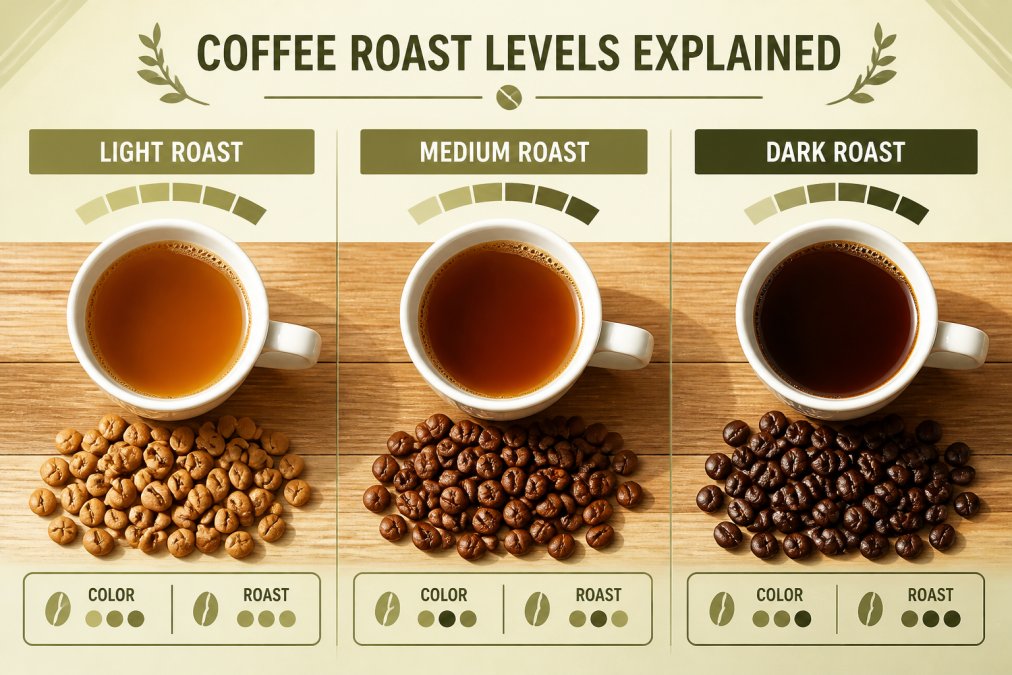
Roast level is the first thing people ask about when choosing coffee, and it's also the thing most people misunderstand. The roast isn't about caffeine content, it's about flavor development and how much the beans have been heated during the roasting process.
Think of roasting like cooking a steak. A light roast is rare. A dark roast is well-done. Each one brings out different qualities in the bean itself.
Light Roasts: Clarity and Origin Character
Light roasts are pulled off the heat early, right around or just after the first crack. The beans are still dense and the surface hasn't developed that oily sheen you see on darker roasts.
What you get is clarity. The origin of the bean comes through, Ethiopian coffees taste bright and floral, Colombian coffees taste sweet and balanced. Light roasts preserve what makes each origin unique.
Light roasts can taste sharp or acidic if they're not handled well, but that sharpness isn't a flaw, it's what makes the coffee taste alive. A good light roast tastes clean and complex, not sour.
Our Blonde blend sits right in this territory. It pulls from select coffees across Central America and Africa to build clarity and sweetness without the brightness turning into harshness.

Medium Roasts: Balance and Everyday Drinking
Medium roasts are the middle ground. The beans have been heated longer than a light roast but haven't reached the second crack yet, and the surface starts to show some oil.
A medium roast should taste balanced, you get some origin character from the bean plus the deeper flavors that develop during roasting: chocolate, nuts, caramel.
Medium roasts are forgiving and work in almost any brewing method. Most people who drink coffee regularly prefer a medium roast because it works for multiple cups without getting exhausting.
The Breakfast Blend in medium roast is built exactly for this. It brings together specialty grade coffees to create something smooth enough for a calm start and strong enough to carry you through the day.
Dark Roasts: Bold Flavor and Body
Dark roasts are heated all the way through the second crack and sometimes beyond. The beans are dark brown or nearly black, and the surface is visibly oily. The roasting process has fundamentally changed the flavor profile.
You lose origin clarity, regional differences get muted, but you gain body and intensity. Dark roasts taste heavier on the tongue with deeper flavors: smoke, earth, dark chocolate, sometimes bitterness if roasted too far.
Dark roasts aren't automatically stronger in caffeine, that's a myth. The caffeine content is determined by the bean, not the roast. But dark roasts feel stronger because they have more body and bolder flavors.
A well-executed dark roast should still taste like coffee, not like charcoal. The roaster has to know exactly when to pull it off the heat. Our French Roast hits that balance. It's deep and bold without tipping into burnt territory. The Italian Roast takes it further, combining specialty-grade Arabica with Robusta for even more body and crema, built for people who want their coffee to show up.
Freshly Roasted Coffee: The Real Difference
Fresh coffee means roasted recently, not roasted months ago and packaged with a date printed on it. The volatile compounds start to break down the moment the beans cool after roasting. After two weeks, you've lost significant flavor. After a month, the coffee tastes flat and one-dimensional.
When you buy from a roaster that roasts to order and ships within 24 hours, you're getting coffee at peak freshness with volatile oils and sharp, complex flavors that taste like the roaster intended.
This is why we roast to order. You place an order, we roast the beans the same day, and ship within 24 hours. By the time they arrive, they're still in that window where they taste best.
Small Batch Coffee Subscription Benefits
Most people don't think about subscriptions for coffee. But a subscription to a small batch roaster changes how you actually buy coffee.
First, there's the freshness guarantee. When you subscribe, your coffee is roasted closer to your order date. You're not competing with retail shelf stock or warehouse inventory.
Second, subscriptions let you control frequency and format. You decide how often coffee shows up, and choose whether you want the same roast or rotate through options. You're building a system that fits your actual habits, not forcing your habits to fit a product.
Third, there's the practical benefit of never running out. Coffee arrives before you're desperate, so you're not making emergency runs to the grocery store or settling for whatever's in stock.
Subscriptions typically come with a discount compared to one-off purchases, and shipping is often included or reduced.
But subscriptions only work if you actually drink the coffee. The best subscription matches your consumption, not your aspirations. If you drink a bag every two weeks, subscribe biweekly. If you drink one a week, subscribe weekly.
The real benefit is that you stop treating coffee as a last-minute purchase and start treating it as something you're intentional about. You know when it's arriving. You know it's fresh. You know what you're getting because you chose it. That shift, from reactive to deliberate, is what separates people who drink coffee from people who actually enjoy it.
What Sets Quality Coffee Apart from Mass-Market Options
Mass-market coffee is optimized for consistency across massive volumes. The beans are often a blend of whatever's cheapest that week, the roasting is standardized, and the coffee sits in warehouses for weeks or months before it reaches the shelf.
It's just the economics of scale. When you're producing millions of pounds of coffee, you can't roast to order or adjust for freshness.
Quality coffee starts with the beans themselves. Specialty-grade coffee comes from specific regions, specific farms, specific altitudes. They have more complexity, more interesting flavors, more potential.
Then comes the roasting. A good roaster knows that different beans need different heat profiles. The roaster adjusts the temperature, the duration, the airflow to bring out what's best in each bean.
Then comes freshness. The coffee is roasted close to when you buy it, not months before. By the time you brew it, it still tastes like the roaster intended.
This is the difference between coffee that tastes like coffee and coffee that tastes like something worth drinking.
Choosing Coffee That Actually Tastes Better
When you're looking for an alternative to what you've been drinking, you need a way to actually evaluate whether something is better. "Better" is personal, but the criteria for judging it are concrete. Here's how to think about it.
Start with roast level, but understand what you're actually choosing. If you've never paid attention to roast, medium is the safest entry point, it works in most brewing methods and doesn't require you to dial in technique. If you like brightness and complexity, light roast will show you what the bean actually tastes like. If you want heaviness and bold flavor, dark roast delivers that.
Then ask about freshness before you buy. This is non-negotiable. A roaster should tell you the roast date without hesitation. If they won't, or if they only print a "best by" date instead of a roast date, that's a sign they're not managing freshness seriously.
Consider your brewing method and ask whether the roaster has recommendations. A good roaster will tell you what works best with their specific coffee. If they don't have an opinion, they haven't thought about it, which is a problem.
Decide whether you want single-origin or blended coffee. Single-origin coffee comes from one farm or region and tastes like that specific place, Ethiopian coffees taste different from Colombian coffees, which taste different from Kenyan coffees. Blended coffee combines beans from different origins to create a specific flavor profile that the roaster designed. Both are legitimate.
Then actually try it in a way that lets you evaluate fairly. Buy a small amount, a half-pound is enough. Brew it the way the roaster recommends. Pay attention to how it tastes. Does it taste fresh or flat? Does it taste like what the roaster said it would taste like? Does it taste better than what you were drinking before?
Don't overthink the first purchase. You're not committing to a lifetime supply. You're testing whether this roaster's approach to freshness, roast level, and bean selection actually produces coffee you prefer. If it does, you can commit to a subscription or regular orders. If it doesn't, you move on and try someone else.
Frequently Asked Questions
What's the actual difference between light, medium, and dark roast coffee?
Light roasts are roasted for a shorter time, preserving the origin character and acidity of the beans. They taste brighter and more complex. Medium roasts balance origin flavor with roast character, making them smooth and approachable. Dark roasts develop deeper, bolder flavors with heavier body. The roast level doesn't determine caffeine content, that's determined by the bean type and brew strength. Choose based on flavor preference, not assumed strength.
How does freshly roasted coffee actually taste different from store-bought options?
Fresh-roasted coffee has volatile compounds and oils that degrade over time. Coffee roasted and shipped within 24 hours retains brightness, clarity, and smoothness that older coffee loses. Store-bought coffee, even from specialty retailers, may have been roasted weeks or months ago. The difference is noticeable in the first sip, fresher coffee tastes cleaner and smoother, without the staleness or bitterness that develops as beans age.
What are the small batch coffee subscription benefits compared to buying one bag at a time?
Small batch subscriptions ensure you're always drinking fresh coffee because roasting happens on a schedule aligned with your consumption. You avoid the problem of beans sitting on shelves. Many subscriptions also offer savings, Bad Habit Collective offers 15% off with a subscription. You can pause or adjust orders anytime, so there's no commitment trap. The real benefit is consistency: fresh coffee every time, without thinking about it.
Why does some coffee taste bitter no matter what roast level I choose?
Bitterness comes from multiple sources: over-extraction during brewing, stale beans, poor quality beans, or roasting that pushes too dark. Mass-market coffee often tastes bitter because it's older and roasted to mask inconsistent bean quality. Specialty roasters use higher-quality beans and roast to highlight flavor, not hide flaws. If you're getting bitterness across different roasts, try fresher beans and check your brewing method, water temperature and brew time matter.
Finding a coffee by the roast alternative that actually works means prioritizing freshness, understanding what roast levels actually do, and buying from roasters who care about the details. Bad Habit Collective roasts to order and ships within 24 hours, so you're always getting peak freshness. Whether you start with our Breakfast Blend for everyday balance or our French Roast for something bolder, you'll taste the difference that freshness makes. Shop our roasts and find what works for you.