
Table of Contents
- Fresh Roasted Coffee vs Store Bought: The Honest Comparison
- How to Tell If Coffee Beans Are Fresh
- Read the Roast Date, Not the Best-By Date
- Check the Packaging and the One-Way Valve
- How Long to Wait After Coffee Is Roasted Before You Brew
- Degassing, Carbon Dioxide, and the Resting Period
- Whole Bean vs Pre-Ground Coffee: Which Stays Fresh Longer
- How to Store Coffee Beans So They Actually Stay Fresh
- Cost and Value: What You Actually Pay For
- Freshness in Practice: What It Means for Your Morning Cup
- Frequently Asked Questions
Last Updated: October 5, 2026
Fresh Roasted Coffee vs Store Bought: The Honest Comparison
Fresh roasted coffee is coffee that gets roasted in small batches and shipped to you within days of roasting, while store bought coffee is typically roasted weeks or months before it ever hits a shelf. That gap matters more than most people realize. At Bad Habit Collective, we roast to order and ship within 24 hours, because the clock starts ticking the moment beans leave the roaster.
Here is the short version: fresh roasted coffee offers distinct advantages in aroma, flavor, and overall brew quality. Store bought coffee typically wins on convenience and shelf stability. Whether that trade-off is worth it depends on what you actually want from your morning cup.
Most coffee drinkers have never tasted truly fresh coffee. They have tasted coffee that was fresh once, back in a warehouse somewhere. Once you know how to read a roast date and understand what happens to beans after roasting, the whole comparison gets a lot clearer.
Specialty Coffee Association's guidance on coffee freshness
How to Tell If Coffee Beans Are Fresh
The fastest way to tell if coffee beans are fresh is to check the roast date on the bag, not the best-by date. A best-by date tells you when the coffee is technically safe to drink. A roast date indicates when it was roasted.
Read the Roast Date, Not the Best-By Date
Roasted-to-order coffee usually prints the roast date right on the bag. Commercially packaged coffee often skips that and prints a best-by date instead, which can sit a year or more out from the roast. That is not freshness. That is shelf life.
If a bag has no roast date at all, treat that as a signal. Many grocery-store coffee brands avoid printing one because the number would not flatter them.
Check the Packaging and the One-Way Valve
A one-way valve on the bag is a good sign. It lets carbon dioxide escape without letting oxygen in. Vacuum packaging and plain sealed bags can preserve coffee longer, but they also trap the gases that need to leave.
How Long to Wait After Coffee Is Roasted Before You Brew
The answer is not "immediately." Most coffee is often considered to taste best somewhere between 4 and 14 days after roasting. Brew it the day it arrives and you may get a flat, gassy cup that has not settled yet.
Degassing, Carbon Dioxide, and the Resting Period
Freshly roasted beans release carbon dioxide for days after roasting (pubmed.ncbi.nlm.nih.gov). This is called degassing, and it is why a bag of just-roasted coffee puffs up. Brew too soon and the CO2 interferes with extraction, which means uneven flavor and a weaker cup.
The resting period varies by brew method. Espresso often benefits from a longer rest, sometimes 7 to 14 days, as the pressure can amplify inconsistencies. Drip coffee and pour-over are often more forgiving and may hit their stride around 4 to 7 days.
This is the nuance most comparisons skip. Fresh does not mean "as close to the roaster as possible." It means "in the window where the coffee tastes right."
Whole Bean vs Pre-Ground Coffee: Which Stays Fresh Longer
Whole beans generally stay fresh longer than pre-ground coffee. Grinding exposes far more surface area to oxygen, and oxidation can diminish flavor. A bag of pre-ground coffee may start tasting dull within days of opening.
Here is the practical breakdown:
- Whole bean: Holds peak flavor for roughly 2 to 4 weeks after the roast date if stored well.
- Pre-ground: Starts losing aroma within hours of grinding and fades fast after opening.
- Grind size matters too: Fine grinds for espresso oxidize faster than coarse grinds for drip.
If you want the best brew quality, buy whole beans and grind right before brewing. If you cannot grind at home, buy pre-ground in smaller amounts so you actually finish it while it still tastes like something.
Our Breakfast Blend (Medium Roast) is built for exactly this. It is a medium roast that holds its balance and clarity without needing a science project to brew well.

How to Store Coffee Beans So They Actually Stay Fresh
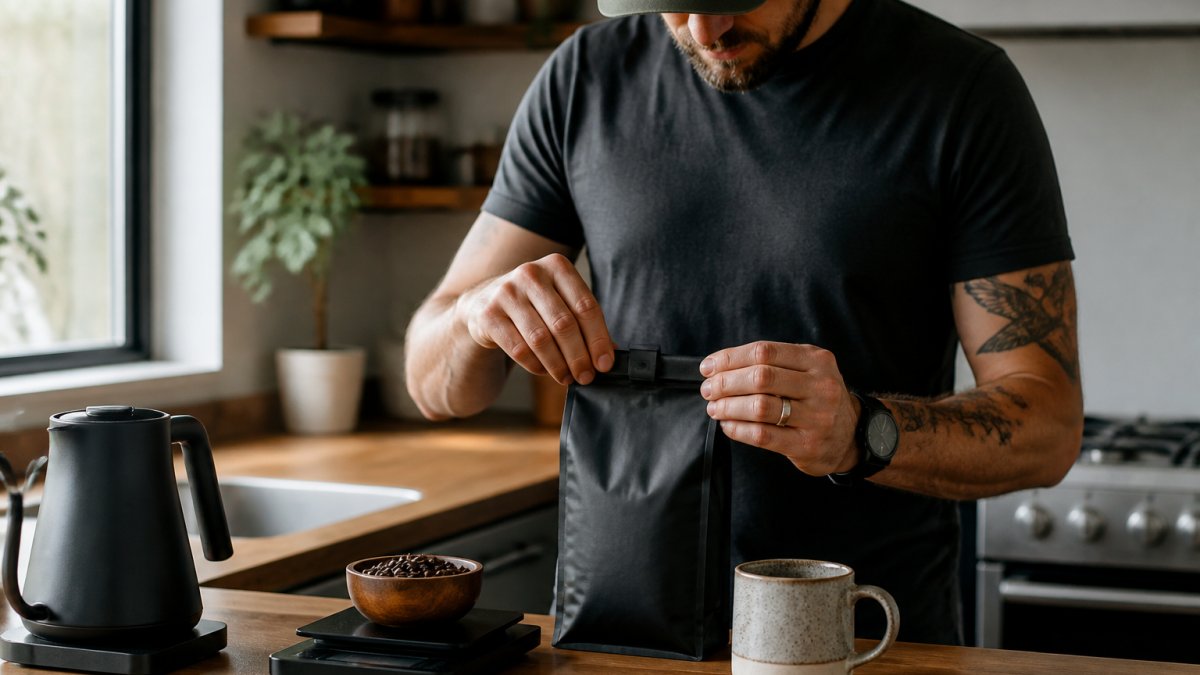
Store coffee beans in an opaque, airtight container at room temperature, away from light, heat, and moisture. That is it. The fancy stuff mostly does not help.
What to avoid:
Breakfast Blend (Medium Roast) →
- The fridge: Coffee absorbs odors and picks up moisture every time you open the door.
- The freezer, usually: Freezing works for long-term storage of unopened bags, but repeatedly thawing and refreezing wrecks the beans.
- The clear glass jar on the counter: Looks great, lets light in, and light degrades coffee.
Buy in amounts you will actually drink in a few weeks. A larger bag saves a little money but goes stale before you finish it, which is a bad trade.
Cost and Value: What You Actually Pay For
Fresh roasted coffee may cost more per bag than some pre-ground options. What matters is cost per cup, not cost per bag, and that is where the comparison can get more interesting than some people expect.
Here is the math most shoppers never run. A standard 12-ounce bag of whole bean coffee brews roughly 16 to 24 cups depending on your dose. If you are using a typical 1:16 ratio, that is about 18 grams of coffee per 10-ounce mug, which puts a 12-ounce bag somewhere in the neighborhood of 18 to 20 cups.
So the real question is not which bag is cheaper. It is which bag you actually finish. If you pour out a quarter of a can because it tastes like cardboard and regret, you did not save anything. You paid for coffee you did not drink.
There are a few other costs worth naming honestly:
- Shipping and freshness logistics. Roasted-to-order coffee has to move fast to be worth anything, and that speed costs money. A roaster shipping within 24 hours of roast is paying for that speed. Mass-market coffee saves on logistics by giving up on freshness, which is a trade, not a free lunch.
- Waste. Stale coffee gets dumped, used as compost, or pushed to the back of the cabinet until it becomes a science experiment. Fresh coffee is often consumed. The waste line item is real even if it never shows up on a receipt.
- Convenience premium. Pre-ground pods and single-serve formats charge you for speed and portioning. That is a legitimate thing to pay for if your mornings are chaos. Just know what you are buying.
- Grinder math. If you are moving from pre-ground to whole bean, a decent burr grinder is a one-time cost that pays for itself over a year of better cups. Blade grinders are cheaper and can produce uneven particles that may brew unevenly.
If you want to test the difference before committing to a full bag, our Best Sellers Sample Pack lets you try six coffees in 2-ounce packs. Our House Blend is roasted to a true medium and built to brew well in a drip maker, a pour-over, or a French press without demanding a science project.


Freshness in Practice: What It Means for Your Morning Cup
Most comparisons of fresh roasted coffee vs store bought fall apart the moment you try to run a fair test. People brew a just-roasted light roast against a six-month-old dark roast from a can, taste the difference, and declare fresh coffee the winner.
A fair test looks like this. Pick the same roast level on both sides. Brew them the same way, with the same grind size, the same water temperature, and the same dose. Taste them side by side, ideally without knowing which is which.
What you tend to notice in a controlled comparison:
- Aroma first. Fresh coffee smells like more than one thing. Stale coffee smells like one flat note, usually the same note regardless of origin.
- Acidity and sweetness. Fresh beans hold their acidity and their sweetness. Stale beans lose both and taste hollow in the middle.
- Finish. Fresh coffee finishes clean or lingers pleasantly. Stale coffee finishes like paper or cardboard, and that aftertaste is the tell.
- Consistency across the cup. Fresh coffee tastes roughly the same from the first sip to the last. Stale coffee often starts okay and falls off a cliff halfway through.
That said, "fresh" does not automatically mean "best." A just-roasted bean can taste flat and gassy because it has not finished degassing. A bean that has rested a week or two may taste more balanced than one that came off the roaster yesterday.
Here is where the practical advice gets real. Not everyone has a local roaster. Not everyone can afford to buy whole bean every two weeks. Not everyone wants to grind at home. That is fine, and pretending otherwise is how coffee writing loses people.
If you are stuck with supermarket options, you can still improve your odds:
- Look for a roast date, not a best-by date. If a bag has a roast date within the last few weeks, it is worth trying even if it is not from a small roaster.
- Check for a one-way valve. A valve means the roaster expected the coffee to still be degassing, which is a good sign.
- Buy whole bean when you can. Pre-ground coffee can start losing aroma within hours of grinding. If you cannot grind at home, buying smaller bags may help ensure you finish them before they fade.
- Skip the giant warehouse club bag unless you drink a lot of coffee. A three-pound bag is a great deal until the last pound tastes like nothing.
- Store it right. Opaque, airtight, room temperature, away from the stove. That is the whole list.
If you want coffee that was roasted on purpose, shipped fast, and built to brew well without a lab setup, our Breakfast Blend (Medium Roast) is a medium roast that holds its balance and clarity in a basic drip maker. It is not a flex.
Frequently Asked Questions
Is fresh roasted coffee better than store-bought coffee?
It often tastes better because it is still near peak flavor when you brew it. Fresh roasted coffee is shipped days after roasting, while grocery-store coffee may sit on shelves for months. This can diminish aroma and sweetness. Freshness can enhance the taste of good beans.
How long should you wait to drink freshly roasted coffee?
Wait 3 to 7 days after the roast date for most brew methods. Freshly roasted beans release carbon dioxide, which can sometimes make a brew taste flat or uneven. Espresso often benefits from 7 to 10 days of resting. After that window, flavor can be more developed.
Is whole-bean coffee fresher than pre-ground coffee?
Yes, whole-bean coffee generally retains freshness longer. Grinding exposes more surface area to air, so pre-ground coffee can lose aroma and flavor within days. Whole beans may hold their character for weeks when stored well. If you want a fresher cup, buying whole bean and grinding right before brewing is often recommended.
How long do roasted coffee beans stay fresh after opening?
Plan on 2 to 4 weeks after opening for good flavor, and up to 6 weeks if stored well. Keep beans in an airtight, opaque container away from heat, light, and moisture. Buy only what you will drink in that window, or split larger bags into smaller portions.
How should you store coffee beans to keep them fresh?
Store them in an airtight, opaque container at room temperature, away from the stove and direct sun. Skip the fridge, where moisture and odors creep in. Skip the freezer unless you are storing sealed portions long-term. Buy whole bean, grind right before brewing, and finish the bag within a few weeks.