
Last Updated: October 26, 2026
Quick Summary
Organic specialty tea is worth the price when you drink tea regularly, care how it was grown, and buy whole leaf that yields multiple cups. Compare cost per serving rather than per box, since a tin that brews dozens of cups often costs less per cup than cheap bags.
- The organic seal verifies farming practices, not leaf quality, freshness or batch residue testing.
- Whole leaf gives you more usable material per ounce and often survives a second or third steep.
- Divide a tin's price by the cups it realistically brews, including resteeps, before judging it.
- Buy to your actual drinking pace, because a large tin that goes stale wastes money.
- Start with one tin and judge the tea on the cup rather than on health claims.
Table of Contents
- The Real Cost of Organic Specialty Tea, Cup by Cup
- Organic Tea vs Conventional Tea: What the Label Actually Changes
- Organic Loose Leaf Tea vs Tea Bags: Where Your Money Goes
- Is Organic Tea Better for You? Separating Evidence From Marketing
- How to Choose Organic Tea Without Wasting Money
- When the Price Is Worth It and When It Isn't
- Build Your Own Tea Shelf From a Brand You Can Call
- Frequently Asked Questions
The Real Cost of Organic Specialty Tea, Cup by Cup
Here is the honest answer to whether organic specialty tea is worth the price: it depends on how much tea you actually drink and what you are paying for. A tin of loose leaf runs more per ounce than a box of conventional tea bags, but that comparison falls apart once you count cups. Organic specialty tea is loose leaf or bagged tea grown without synthetic pesticides or fertilizers and certified to a recognized standard, sold in smaller quantities at a higher price per ounce but often at a lower price per cup than the sticker suggests.
At Bad Habit Collective, we sell tea, so we have a dog in this fight. We will still tell you where the premium is real and where it is marketing.
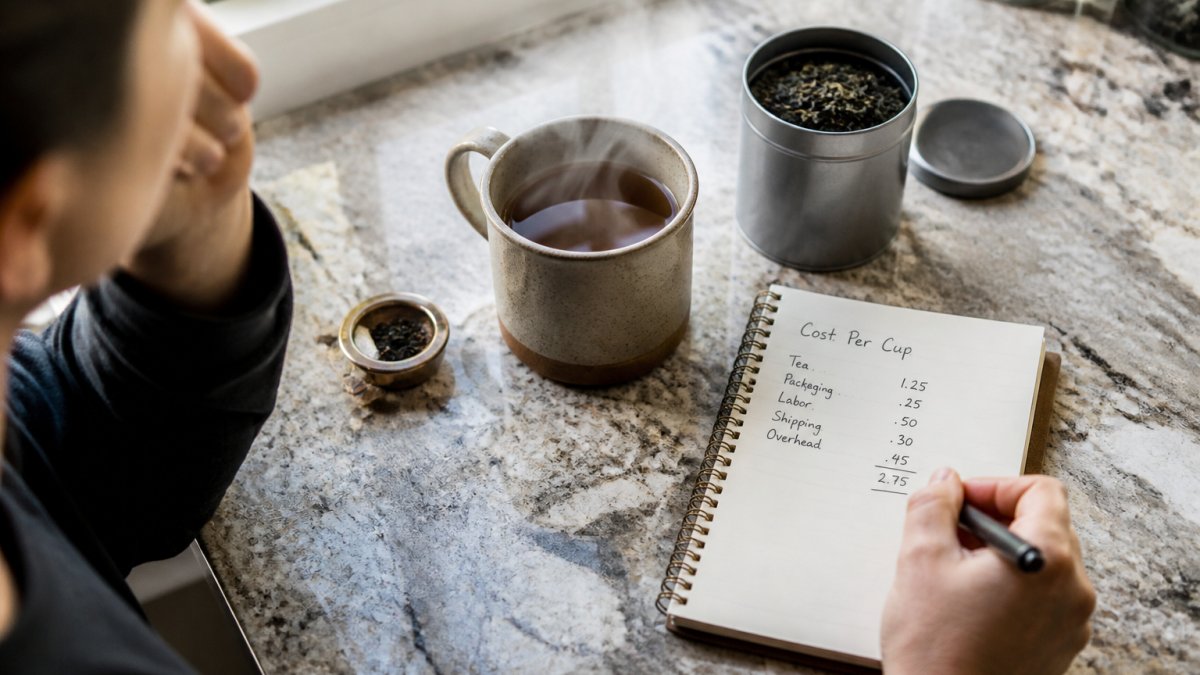
The math that matters is cost per serving, not cost per box. A tin of loose leaf that yields dozens of cups can beat a cheap box of bags on a per-cup basis, especially when the leaves steep more than once. Below, we break down where the money goes, what the label actually guarantees, and how to decide if the upgrade earns its place on your shelf.
Organic Tea vs Conventional Tea: What the Label Actually Changes
The organic label changes how tea is grown and handled. It does not change what is in the cup, how it tastes, or how healthy it is. That is the whole story, and most of the confusion around organic tea comes from sellers who blur it.
Certified organic means a producer met a defined set of farming and handling rules and paid to be inspected against them. In the United States, that standard is set by the USDA National Organic Program, which governs how crops are grown, handled and labeled.
What the seal does not tell you is just as important. It does not grade the leaf. A certified organic tea can be low-grade dust swept off a processing floor. A conventional tea from a careful grower can be excellent.
Here is the distinction that matters most, and it is the one almost nobody explains: certification is a process standard, not a residue test. The USDA program verifies that a grower followed the rules. It does not test every finished tin for pesticide residue, and it does not certify that a given cup is chemical-free.
Independent residue testing is a separate layer. Some importers and retailers pay labs to screen finished tea for pesticide residues, and those results are a different kind of evidence than a certification document.
So when you compare organic and conventional tea, ask what you are actually buying. If you want a documented farming standard, the organic seal is a reasonable filter. If you want evidence about a specific batch, look for a seller who publishes residue testing.
Organic Loose Leaf Tea vs Tea Bags: Where Your Money Goes
Organic loose leaf tea usually delivers more usable leaf per dollar than tea bags, and the gap is bigger than most people expect. The reason is simple: bags hold broken leaf and dust, which extracts fast and flattens out after one steep.
That changes the cost per serving math, which is the number that actually answers whether the price is worth it. A tin of loose leaf looks expensive next to a box of bags because you are comparing a larger upfront purchase to a smaller one.
Walk through it with a realistic example, using round numbers so you can plug in your own prices.
The catch is that the math only works if you actually drink the tea. A tin you brew twice and forget is the most expensive tea in your kitchen.
There is a convenience trade-off, and we will not pretend otherwise. Loose leaf needs a strainer or a pot and a little more attention. If your morning is a sprint, a bag is a legitimate choice and nobody is grading you.
One more variable worth tracking: resteeps. Whole-leaf teas, oolong, many greens, some blacks, often give you two, three or more good infusions from the same measure of leaf. Each additional steep cuts the effective cost per cup.
For readers who want to see what a real organic loose leaf option looks like, our Organic Hibiscus Berry is a straightforward place to start: whole ingredients, a bright cup, and it holds up iced.

Is Organic Tea Better for You? Separating Evidence From Marketing
Organic tea is not proven to be healthier than conventional tea in any dramatic way. The honest position is that the health case for tea in general is stronger than the health case for organic specifically. Tea brings antioxidants and a pleasant ritual; the organic label mostly reduces your exposure to certain agricultural chemicals.
That is a real benefit for some buyers and a non-factor for others. If you are buying tea for the caffeine and the ritual, organic status will not change your day. If you are specifically trying to limit synthetic pesticide exposure in your diet, the label is a reasonable filter.
What we would not do is pay a premium because a package implies organic tea cures or prevents anything. It does not. Anyone selling you tea as medicine is selling you something else.
If you want to evaluate an organic option on its own merits, our Matcha is ceremonial grade, stone-milled, and sourced from a named garden in Shizuoka, Japan. Judge it on the cup, not the health claims.

How to Choose Organic Tea Without Wasting Money
Choosing organic tea without wasting money comes down to matching the premium to what you actually value. Start with the decision framework below, then buy small before you commit.
- Decide why you want organic. If it is chemical exposure, the label earns its premium. If it is flavor, buy on taste and treat organic as a bonus.
- Compare cost per serving, not per box. Divide the tin price by the number of cups it realistically yields, including resteeps.
- Buy whole leaf over dust when you can. Whole leaf gives you more cups and a better cup from the same weight.
- Check the origin and harvest where the seller lists it. Specific sourcing is a signal of a producer who knows their supply chain.
- Start with one tin. A tea you love at a fair per-cup price beats a bargain you never finish.
Two solid starting points if you want to test the water: our Moroccan Mint for a green tea and fresh mint blend that works hot or iced, and our Jasmine for a medium-bodied green tea built for multiple steeps. Both let you judge loose leaf value on your own counter.

When the Price Is Worth It and When It Isn't
The organic premium is worth it when you drink tea regularly, care about how it was grown, and buy whole leaf that stretches across multiple cups. It is not worth it when you drink tea rarely, when you cannot taste the difference, or when you are paying extra for a label on low-grade leaf.
Run the per-cup math before you decide. A higher tin price that yields three times the cups is not a splurge, it is a better deal. A premium price on a tea you will brew once and forget is money in the trash.
Watch out: buying a large quantity to "save money" backfires if the tea goes stale before you finish it. Buy to your actual drinking pace.
Build Your Own Tea Shelf From a Brand You Can Call
The real question is not whether organic specialty tea is worth the price in the abstract. It is whether a specific tin earns its spot on your shelf. We think the answer is yes when the leaf is good, the sourcing is clear, and the per-cup math works in your favor.
Bad Habit Collective was built by two Army veterans who take the work seriously and not much else. We roast coffee in small batches and ship within 24 hours, and we carry a small tea line we actually stand behind. Our Masala Chai is full-bodied and aromatic, built for a traditional cup with milk and sugar or strong enough to drink on its own. Every order comes with our 7-Day Taste Guarantee, and we answer questions ourselves, no scripts.
Start with one tin, brew it your way, and see if the cup earns the price. We think it will.
Frequently Asked Questions
Is organic specialty tea worth the price?
It depends on how much you drink and what you want from the cup. Organic specialty tea usually costs more per serving than conventional bags, but the gap shrinks when you compare loose leaf tea by the cup instead of by the box. If you drink tea daily and care about flavor, sourcing, and how the leaves were grown, the premium often works out to a few cents per serving. If you drink an occasional mug and mostly care about convenience, conventional bags are fine.
Is organic tea better for you than conventional tea?
The honest answer is that the research is not settled. Organic certification addresses how tea is grown, not a guaranteed health outcome. What you can say is that organic production limits synthetic pesticides and fertilizers, which may reduce your exposure to agricultural chemicals. Conventional tea still has to meet food safety rules. If reduced chemical exposure matters to you, organic is a reasonable choice. If you are chasing a specific health benefit, the tea type and how much you drink matter more than the label.
Is loose leaf tea better than tea bags?
For flavor and value, loose leaf usually wins. Whole leaves have room to unfurl, which gives you more aroma and a fuller body, and you can often steep the same leaves more than once. That second and third steep is where the cost per cup drops. Tea bags are more convenient and consistent, but many use smaller leaf pieces or dust that give up flavor fast. A good middle ground is a large-leaf bag or a loose leaf blend you actually enjoy brewing.
How can you tell whether organic tea is high quality?
Start with the leaf. Whole leaves and intact buds usually signal better handling than dust or fannings. Look for a clear origin, a harvest or processing note, and a smell that is fresh rather than dusty. Certification matters, but it does not replace quality. A certified organic tea that sat in a warehouse for two years will taste flatter than a fresh, well-sourced conventional tea. Buy from sellers who tell you where the tea came from and how it was handled.
What makes specialty tea more expensive?
Several things stack up. Hand-picking and small-batch processing cost more than machine harvesting. Certification adds paperwork and inspection costs. Good tea also has to be stored and shipped carefully so it does not go stale. Those costs show up in the price, but they also show up in the cup. The trick is to pay for the parts you actually taste, which usually means fresh leaves and careful handling more than a logo on the tin.
