
Table of Contents
- Why Does My Coffee Taste Bitter? Start With the Taste, Not the Grinder
- Bitterness vs. Sourness vs. Astringency: Three Different Problems
- How to Fix Bitter Coffee: A Step-by-Step Troubleshooting Order
- Step 1: Adjust the Grind
- Step 2: Check Water Temperature and Brew Time
- Step 3: Recheck Ratio, Beans, and Equipment
- Coffee Grind Size for Less Bitter Coffee: Why Consistency Beats Precision
- Coffee Brewing Temperature: The Overlooked Variable
- Coffee-to-Water Ratio: The Measurement Most People Skip
- Bean Quality, Freshness, and Roast Level: When the Coffee Itself Is the Problem
- Storage Is Where Most People Lose the Battle
- How Freshness Actually Shows Up in the Cup
- Brew-Method-Specific Fixes: French Press, Pour-Over, Drip, and Espresso
- When Bitter Coffee Is Actually the Point
- Frequently Asked Questions
Last Updated: October 12, 2026
Why Does My Coffee Taste Bitter? Start With the Taste, Not the Grinder
If you are asking why does my coffee taste bitter, the cause is usually over-extraction: hot water pulling too many bitter compounds out of the grounds.
Bitter coffee is the most common complaint, and it is almost never the bean's fault. Most of the time, the brewing technique is the problem.
Bitterness is not the same as strength. A strong cup can taste clean and sweet. A weak cup can still taste harsh. That difference matters, because it changes what you adjust first.
Below, we will show you exactly how to fix bitter coffee in four steps, starting with the adjustment that solves most cases.
Bitterness vs. Sourness vs. Astringency: Three Different Problems
Bitterness is a sharp, harsh taste that lingers on the back of your tongue and comes from over-extraction. Sourness is a bright, acidic bite that hits the sides of your tongue and points to under-extraction. Astringency is a dry, mouth-drying feel, like over-steeped tea.
People mix these up constantly. Then they "fix" the wrong problem and make the cup worse.
Here is the quick way to tell them apart:
- Bitter: harsh flavor, lingering aftertaste, back of the tongue.
- Sour: sharp, tangy, almost citrus-like, sides of the tongue.
- Astringent: dry mouthfeel, no real taste, just a chalky finish.
If you are not sure which one you are tasting, brew two cups back to back. Make one with a finer grind and one with a coarser grind. The difference will tell you which direction to go.
How to Fix Bitter Coffee: A Step-by-Step Troubleshooting Order
Fix bitter coffee in this order: grind size first, then water temperature and brew time, then ratio, then beans and equipment. Change one variable at a time and brew at least two cups before you judge the result.
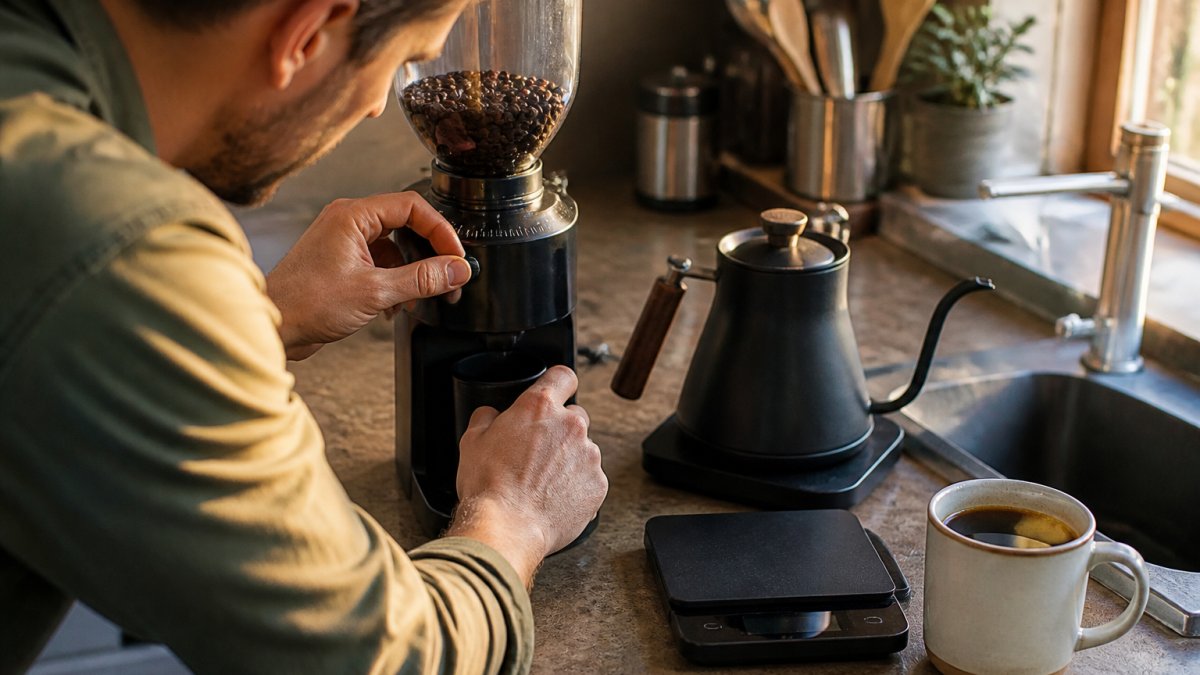
Most people start by blaming the coffee. That is backwards. The grinder and the brewing method cause more bitterness than the bean ever will.
Here is the order, with actual numbers to start from.
Step 1: Adjust the Grind
Go coarser. A finer grind means more surface area, which means faster extraction and more bitter compounds in your cup. Backing off the grind size is the single fastest fix for bitter coffee.
Move one setting coarser at a time. Brew a cup. Taste it. If it is still harsh, go one more. Stop when the bitterness fades and you start tasting something sweet underneath.
For a starting reference: medium grind works for drip, coarse for French press, medium-fine for pour-over, and fine for espresso. If your current setting is finer than that, you found your first suspect.
Step 2: Check Water Temperature and Brew Time
Lower your water temperature and shorten your brew time. Water that is too hot pulls out harsh, ashy flavors. Leaving the grounds in contact with water too long does the same thing.
The target range for most methods is 195°F to 205°F. If you are boiling and pouring straight in, you are likely above that. Let the kettle sit 30 to 45 seconds off the boil before you pour.
Brew time depends on the method. A drip cycle usually runs four to five minutes. A French press steep runs four minutes. A pour-over runs two and a half to three and a half minutes.
Step 3: Recheck Ratio, Beans, and Equipment
If steps one and two did not fix it, look at your coffee-to-water ratio, your beans, and your gear.
Start at 1:15 by weight, one gram of coffee to 15 grams of water. If you are well outside that, correct it before you touch anything else.
Old residue in your coffee maker is another common culprit. A dirty machine leaves behind oils that turn rancid and add a bitter aftertaste to every cup. Clean it. If you cannot remember the last time you did, that is your answer.
Coffee Grind Size for Less Bitter Coffee: Why Consistency Beats Precision
Consistency matters more than the exact number on your grinder dial. An uneven grind, where some particles are powder-fine and others are boulder-sized, extracts unevenly.
A burr grinder gives you even coffee particles. A blade grinder does not, no matter how long you run it.
If you are stuck with a blade grinder, pulse it in short bursts and shake it between pulses. It helps. It will not match a burr grinder, but it beats a cloud of dust and chunks.
Buy whole beans and grind right before you brew. Freshly ground coffee holds its flavor. Pre-ground coffee loses it fast.
Coffee Brewing Temperature: The Overlooked Variable
The ideal water temperature for most brewing methods sits between 195°F and 205°F. Water above that range scalds the grounds and pushes bitter compounds into your cup. Water below it under-extracts and leaves you with a sour, weak brew.
Breakfast Blend (Medium Roast) →
Most drip coffee makers land in the right range. Some run hot. If yours does, you cannot fix it with technique alone.
For pour-over and French press, boil your water, then wait. Thirty seconds off the boil usually puts you in range. A cheap thermometer takes the guesswork out.
Coffee-to-Water Ratio: The Measurement Most People Skip
Start with a 1:15 ratio by weight: one gram of coffee to 15 grams of water. That is roughly two tablespoons of grounds per six ounces of water. Adjust from there.
Too weak and the water keeps extracting past the good flavors into the bitter ones. Too strong and you mask everything with harshness. Neither is what you want.
Weigh your coffee if you can. A kitchen scale costs less than a bag of beans and fixes more bad cups than any other tool. Scoops vary wildly, and eyeballing it is how most people end up with bitter coffee they cannot explain.
Bean Quality, Freshness, and Roast Level: When the Coffee Itself Is the Problem
Old beans and over-roasted beans both taste bitter, but for different reasons. Stale coffee oxidizes and develops a flat, harsh flavor. Over-roasted beans get pushed past the point where the roast character turns ashy and burnt.
Check the roast date, not the best-by date. Coffee tastes best within a few weeks of roasting. If the bag has no roast date, that tells you something too.
Dark roast does not mean more caffeine, by the way. It means more roast flavor. A well-developed dark roast can taste rich and smooth. A poorly developed one tastes like the inside of a campfire.
Storage Is Where Most People Lose the Battle
You can buy great beans and ruin them in three days. Oxygen, moisture, heat, and light are the four things working against you, and most kitchen storage fails on at least two of them.
A clear glass jar on the counter next to the stove hits all four.
The fix is boring and cheap. Keep beans in an opaque, airtight container at room temperature, away from the stove and the window.
Buy whole beans and grind right before you brew. Ground coffee has far more surface area exposed to air, which means it stales in days instead of weeks.
How Freshness Actually Shows Up in the Cup
Fresh coffee smells like something when you open the bag. Stale coffee smells like cardboard or nothing at all. That is your first test, and it costs nothing.
In the cup, stale coffee tastes flat and slightly papery, with a bitterness that sits on top of the flavor instead of inside it. Fresh coffee has sweetness and structure underneath whatever roast character is there. If the bitterness has no counterweight, age is a likely reason.
This is where freshness does the heavy lifting. Our Breakfast Blend (Light Roast) is built for a clean, composed cup with none of that stale edge, and because it is a lighter roast, the bean's own character has room to come through instead of getting buried under roast flavor.

Brew-Method-Specific Fixes: French Press, Pour-Over, Drip, and Espresso
Each brewing method has its own common bitterness trap. Here is where to look first for each one.
- French press: cut your steep time and use a coarser grind. Metal filters let fine particles through, and those keep extracting in the cup.
- Pour-over: check your pour speed and water temperature. A slow, uneven pour over-extracts the center of the bed.
- Drip coffee maker: clean it, then check the grind. Most drip machines run hot and brew longer than you think.
- Espresso: grind coarser or shorten the shot. A shot that runs long tastes bitter every time.
Adjust one thing per method. Give it two or three brews before you judge the change.
When Bitter Coffee Is Actually the Point
Some bitterness is supposed to be there. A traditional Italian-style dark roast, a heavy-bodied espresso, or a strong French roast all carry a bitter edge on purpose. That is the character, not a flaw.
The trick is telling intentional bitterness from a brewing mistake. Intentional bitterness sits inside a balanced cup. You still taste sweetness, body, and a clean finish underneath it.
If you want that heavy, structured cup on purpose, our Italian Roast is slow roasted to build depth without losing its shape.

Fix the technique first. Then decide whether the bitterness you are tasting is the roast doing its job.
Frequently Asked Questions
How do you get the bitterness out of coffee?
Change one variable at a time, starting with grind. If your coffee tastes bitter, the most common cause is over-extraction: too fine a grind, water that is too hot, or too long a brew time. Coarsen the grind slightly, keep water just off a rolling boil, and shorten the brew by 15 to 30 seconds. If the cup is still harsh, check your coffee-to-water ratio and make sure your equipment is clean. Old residue in a coffee maker adds a bitter aftertaste no bean can overcome.
Can a grind that is too fine make coffee taste bitter?
Yes, and it is the first thing to check when troubleshooting bitter coffee. A fine grind exposes more surface area to hot water, so the water pulls bitter compounds out faster. It also slows drainage in drip and pour-over, which stretches contact time. If your grinder produces a mix of fine and coarse particles, the fines over-extract while the coarse ones under-extract, giving you a cup that tastes bitter and weak at the same time. A consistent grind size for less bitter coffee matters more than hitting an exact number.
Does brewing coffee for too long make it bitter?
It does. Extraction keeps pulling flavor compounds for as long as water touches the grounds, and the harsh ones come out last. A French press left to steep for eight minutes will taste noticeably more bitter than one pressed at four. The fix is simple: shorten brew time before you change anything else. In drip machines, that may mean using less water or a coarser grind so the bed drains faster.
Is it okay to drink bitter coffee?
Bitter coffee will not hurt you, but it usually means you are drinking a poorly extracted cup rather than getting the flavor the beans were roasted to deliver. A little bitterness is normal in dark roasts and espresso, where it balances sweetness and body. If every cup tastes harsh and leaves a dry mouthfeel, the problem is your brewing method, not the coffee itself. Fixing grind, temperature, or ratio takes a few minutes and makes the same bag taste completely different.
Bitterness in coffee is almost always a technique problem, and technique is fixable. Start with the grind, work through temperature, time, and ratio, and clean your gear. If you want a cup that starts smooth because the beans were never the problem, Bad Habit Collective roasts to order and ships within 24 hours, with specialty-grade beans, a 7-Day Taste Guarantee, and free shipping on all coffee. Get started with Bad Habit Collective and taste what your morning has been missing.