
Last Updated: October 25, 2026
Quick Summary
French press vs pour over comes down to filtration: French press uses a metal mesh that lets oils and fine particles through, creating a heavier, fuller-bodied cup, while pour-over uses a paper filter that traps those oils and produces a cleaner, brighter cup. The same beans brewed in each method taste noticeably different, and which one you choose depends on whether you want richness or clarity.
- French press steeps grounds directly in water for about four minutes, while pour-over passes water through grounds in three to four minutes.
- Metal mesh filters in French press let coffee oils pass through; paper filters in pour-over trap most oils and sediment.
- Grind size matters: use coarse for French press and medium for pour-over to avoid over-extraction or under-extraction.
- Water temperature should stay between 195 to 205 degrees Fahrenheit for both methods to extract properly.
- Medium and dark roasts work best in French press; light and medium roasts shine in pour-over where clarity stands out.
Table of Contents
- French Press vs Pour-Over: The Core Flavor Difference
- How Filtration Changes What You Taste
- Body, Mouthfeel, and Coffee Oils
- French Press vs Pour-Over Grind Size and Extraction
- Best Coffee for French Press Brewing
- Best Coffee for Pour-Over Brewing
- Choosing Your Brewing Method and Coffee
- Frequently Asked Questions
French Press vs Pour-Over: The Core Flavor Difference
When you're deciding between french press vs pour over brewing, it comes down to one fundamental difference: how the coffee grounds interact with water and what gets into your cup. French press uses immersion brewing, where grounds steep directly in hot water, then you press them to the bottom. Pour-over uses percolation, where water flows through grounds and a paper or metal filter captures the oils and fine particles. That single difference shapes everything about flavor, mouthfeel, and what you taste in the morning.
You can use the same coffee beans in both devices and get two completely different cups. One feels rich and full-bodied. The other tastes clean and bright. Neither is objectively better, but understanding which one matches your palate helps you choose the right ritual for your day.
Understanding french press vs pour over means looking at what's actually happening in each cup, and why it matters for how your coffee tastes.
How Filtration Changes What You Taste
The metal mesh filter in a French press lets coffee oils and fine particles pass through into your cup. A paper filter in a pour-over traps most of them. That is the core reason these two methods taste so different, but the story gets more useful once you look at what kind of filter you are actually using.
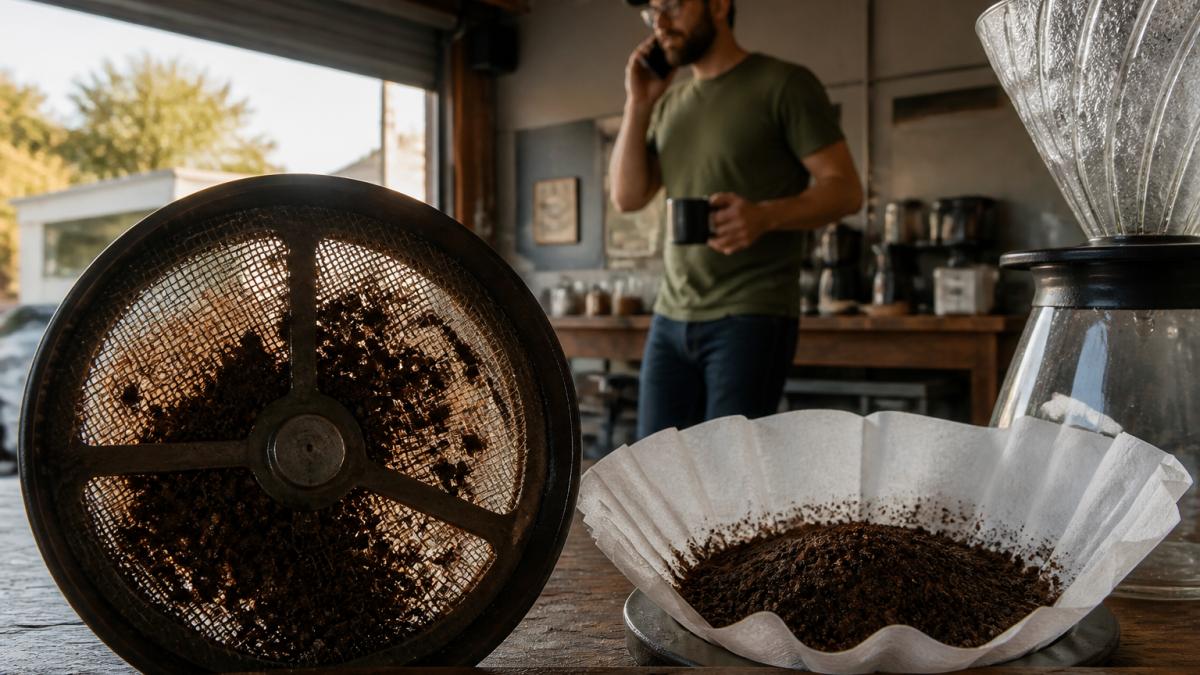
Coffee oils carry flavor compounds and create that full, coating sensation on your tongue. When you drink French press coffee, you are tasting the complete picture, nothing filtered out. Pour-over coffee tastes cleaner because the paper filter removes those oils along with most of the finer sediment.
Here is where most comparisons stop, and where the practical detail matters. Not all pour-over filters are the same. A thick, tight-weave paper filter, the kind sold as a bleached or unbleached cone for a standard dripper, traps more oil and more fines than a thin, fast-draining filter.
Paper type also leaves a fingerprint. Unbleached paper can contribute a faint papery note if you skip rinsing, and a dry filter absorbs heat from the first part of the pour. Rinse the paper with hot water before you brew. It knocks down the paper taste, preheats the cone, and lets the water flow more evenly.
Sediment is the other half of the filtration story. French press coffee holds fine particles in suspension.
This is not a flaw in either method. It is a choice, and now you can make it deliberately. If you want the weight and richness of unfiltered coffee, French press delivers that. If you want a cleaner, more delicate cup where individual flavor notes stand out, pour-over with a rinsed paper filter is your answer.
Body, Mouthfeel, and Coffee Oils
Body describes how heavy or light the coffee feels when you drink it. French press coffee has a heavier body because those oils coat your mouth and linger. Pour-over coffee feels lighter and crisper because the paper filter removes most of the oils.
This matters more than it sounds. A heavy-bodied cup can feel satisfying and indulgent. A light-bodied cup can feel clean and refreshing. If you're drinking coffee first thing in the morning before a workout, you might want that crisp, clean sensation. If you're settling in for a slow Saturday morning, the heavier body of French press might feel more deliberate and intentional.
The mouthfeel, how the coffee actually feels in your mouth, is also shaped by sediment. French press coffee has fine particles suspended in it. Most people don't notice them if the coffee is fresh, but they do add to the overall sensation. Pour-over coffee, filtered through paper, feels smoother because those particles are trapped in the filter. Some people find the slight grittiness of French press adds character. Others prefer the clean finish of filtered coffee.
French Press vs Pour-Over Grind Size and Extraction
Grind size is the first lever, but it is not the only one. Learn how to brew better coffee at home to master each variable and dial in your preferred method.
Start with grind. For French press, you want a coarse grind, roughly the texture of sea salt. The grounds need space for water to move around them during the steep, and a coarse bed is easier to press cleanly.
The ratio is the next lever, and it is where a lot of flavor complaints actually originate. A common starting point for both methods is about 1 part coffee to 15 or 16 parts water by weight.
Water temperature matters more than most people expect. Somewhere around 195 to 205 degrees Fahrenheit is the working range for both methods. Water that is too cool under-extracts and tastes sour or flat. Water that is too hot over-extracts and tastes harsh.
Agitation is the lever competitors rarely mention. In a French press, the moment you break the crust of grounds at the top of the steep and give it a stir, you increase extraction.
Breakfast Blend (Medium Roast) →
Contact time ties it together. French press gives you about four minutes of full immersion. Pour-over gives you three to four minutes of water actively passing through the bed.
That gives you a working troubleshooting loop. Sour or sharp? Extract more: grind finer, raise the temperature, or extend the time. Bitter or drying? Extract less: grind coarser, drop the temperature, or shorten the time. Weak and watery? Check the ratio first, then the grind. Muddy or silty?
One more thing worth saying plainly: the gap between these two methods is not fixed. Brew a coarse French press and a coarse pour-over and the cups converge. Brew a fine French press and a fine pour-over and they converge again, just in a different place.
Best Coffee for French Press Brewing
French press rewards coffee that can stand up to immersion brewing and the presence of oils in the cup. Medium and dark roasts typically shine in a French press because their flavor profiles are bold enough to shine through the heavier body. A medium roast like our House Blend works well in French press, it's roasted to a true medium with balanced body and structure, designed to perform no matter how you brew it. The blend brings together coffees from Central and South America for consistency and full flavor that doesn't get lost in the oils and sediment.

Single-origin coffees with deeper, more structured flavor notes also work well in French press. The brewing method amplifies the coffee's natural character. If you're using a coffee with chocolate or nutty notes, French press will make those more pronounced. If you're using a lighter, more delicate coffee, those subtle notes might get overwhelmed by the heavier body and oils.
Avoid very light roasts in French press unless you specifically want a heavier interpretation of that coffee. Light roasts are designed to highlight origin character and brightness, qualities that get muted when you add body and oils. You're not getting the best out of the coffee, and you might end up with a cup that tastes flat or muddy.
Best Coffee for Pour-Over Brewing
Pour-over shines with coffees that have clarity and complexity. Light and medium roasts work beautifully because the clean filtration lets delicate flavor notes come through. The Breakfast Blend in light roast brings together South American coffees from Colombia, Brazil, and Peru for balance and clarity. It's roasted just past light to preserve origin character while adding depth, exactly what pour-over highlights.
Single-origin coffees are exceptional in pour-over. Take our Costa Rica, sourced from high elevations in Tarrazú and grown in volcanic loam. It delivers a bright, articulate cup with controlled complexity. In a pour-over, you taste that precision and clarity. The paper filter removes the oils that would mask those delicate notes. You get the coffee exactly as the roaster intended.
Pour-over is also forgiving with medium roasts if you prefer them. The clean filtration prevents any heaviness from becoming overwhelming. You get the body without the oils dominating the flavor profile.
Choosing Your Brewing Method and Coffee
The real question isn't which method is better. It's which one matches how you want to drink coffee today.
Choose French press if you want a ritual that feels intentional and indulgent. You're committing four minutes to steeping, then pressing, then pouring. The heavier body and present oils create a cup that feels complete and satisfying. It's a deliberate act, not a quick grab-and-go moment.
Choose pour-over if you want clarity and control. You're actively pouring water over grounds, watching the brew happen in real time. The clean filtration highlights what makes the coffee special, the origin character, the roast profile, the individual flavor notes. It's a more engaged brewing experience.
Neither method is faster or slower in any meaningful way. Both take about four minutes. Neither is harder to clean up. French press leaves you with grounds to rinse out. Pour-over leaves you with a used filter to toss. The difference is in what ends up in your cup and how you want to spend those four minutes.
If you're new to specialty coffee and aren't sure which method to start with, try both with the same coffee. Learn how to choose coffee beans by roast, flavor, origin and brew method, then find a fresh-roasted Bad Habit Collective coffee that fits your taste. Brew it in a French press one morning. Brew it in a pour-over the next. One will feel right for how you want to drink coffee. Start there.
The method you choose shapes your morning ritual more than most people realize. It's not just about convenience or equipment. It's about deciding whether you want your coffee to feel bold and present, or clean and articulate. Bad Habit Collective roasts coffee designed to perform in whatever method you choose, but the choice itself is yours. Pick the one that matches how you want to spend those four minutes, and stick with it long enough to dial it in.
Frequently Asked Questions
What is the flavor difference between French press and pour-over coffee?
French press coffee tastes richer and fuller-bodied because the metal mesh filter allows coffee oils and fine sediment to pass through. Pour-over uses paper filters that trap oils, creating a cleaner, brighter cup with more pronounced acidity and delicate flavor notes. The same beans will taste noticeably different between the two methods due to how much of the coffee's natural compounds reach your cup.
Does French press coffee taste stronger than pour-over?
French press typically tastes stronger and bolder because the immersion brewing method and metal mesh filter preserve more of the coffee's oils and body. Pour-over extracts flavor through percolation, which can feel lighter and more refined. Strength and flavor intensity are different from caffeine content, though, both methods extract similar amounts of caffeine when brewed correctly.
Which brewing method brings out more flavor in pour-over versus French press?
Pour-over excels at highlighting delicate, complex flavors because paper filtration removes oils that can mask subtle notes. French press emphasizes the coffee's full body and chocolate or nutty characteristics. For bright, fruity, or floral coffees, pour-over shows more clarity. For coffees you want to experience as rich and structured, French press delivers more presence. Your choice depends on what you want to taste.
Can the same coffee beans taste different in a French press and pour-over?
Yes. The same beans will produce noticeably different flavor profiles because filtration, brew time, and water contact affect extraction. A light roast in a pour-over might taste crisp and bright; in a French press, it becomes smoother and heavier. Roast level, bean origin, and grind consistency all interact with the brewing method to shape the final cup.
