
Table of Contents
- What Makes a Specialty Coffee Subscription Worth Your Money
- Best Coffee Subscriptions: Sample Packs and Single Origins
- Best Sellers Sample Pack: Explore Six Different Roasts
- Single Origin Favorites Sample Pack: Six Distinct Origins
- Flavored Coffees Sample Pack: Medium Roasts with Character
- Coffee Subscription Frequency: How Often Should You Order
- Whole Bean Versus Ground: Which Format Stays Fresher
- How to Store Coffee Beans at Home for Maximum Freshness
- Single-Origin Coffee Versus Blends: Finding Your Preference
- Matching Your Brewing Method to the Right Roast
- Why Freshness and 24-Hour Shipping Matter
- Frequently Asked Questions
Last Updated: October 21, 2026
What Makes a Specialty Coffee Subscription Worth Your Money
A specialty coffee subscription isn't just a convenience, it's the difference between drinking yesterday's coffee and tasting something that arrived at your door 24 hours after roasting.
Most people assume specialty coffee subscriptions cost more because of marketing hype. The real reason is simpler: freshness is harder to deliver than volume. Mass-market coffee gets roasted weeks in advance, travels through distribution channels, and sits in retail bags. A specialty coffee subscription for home cuts that timeline to hours. You taste the difference immediately.
The question isn't whether to buy specialty coffee, it's whether you're willing to pay attention to what you're actually drinking. If you've noticed that coffee tastes flat or bitter no matter how you brew it, freshness is probably your missing piece.
Best Coffee Subscriptions: Sample Packs and Single Origins
Starting with a sample pack is the smart move. You get variety without committing to five pounds of a single roast, and you figure out what actually matters to your palate before building a regular subscription.

Best Sellers Sample Pack: Explore Six Different Roasts
The Best Sellers Sample Pack gives you six 2-ounce packs for $28.95, and it's built around what people actually order repeatedly. You get the 6Bean Blend (a dark roast espresso blend), the Cowboy Blend (dark and medium mix with cocoa and caramel), the Breakfast Blend (smooth medium roast), and three single origins: Peru, Mexico, and Bali.
This pack works because it doesn't make you guess. The Breakfast Blend carries you through morning-to-night consistency. The Cowboy Blend shows what happens when you blend roast levels, you get complexity without heaviness.
Two ounces per pack is enough to brew a few cups and actually form an opinion, not just taste it once and forget. Most people use this pack to figure out whether they prefer blends or single origins, and whether they want lighter or darker roasts.
Single Origin Favorites Sample Pack: Six Distinct Origins
The Single Origin Favorites Sample Pack is $28.95 and includes Brazil Santos, Colombia, Costa Rica, Ethiopia, Honduras, and Tanzania, all medium or lighter roasts. This is for people who want to taste how geography shapes flavor.

Single-origin coffee means all the beans come from one region, which lets you experience what altitude, soil, processing method, and climate actually do. Brazil Santos tastes elegant and smooth with cocoa. Colombia brings dried orange and berry. Costa Rica leans sweet with apple and raisin. Ethiopia goes bright and fruity. Honduras adds spice and brown sugar.
The reason to start here instead of blends is simple: single origins teach you your own preferences faster. You'll quickly figure out whether you prefer bright and fruity coffees or smooth and chocolatey ones. That knowledge saves you money later because you stop guessing.
Flavored Coffees Sample Pack: Medium Roasts with Character
The Flavored Coffees Sample Pack runs $28.95 and includes French Vanilla, Hazelnut, Cinnabun, Caramel, and Mocha, all medium roasts with natural flavoring oils added while the coffee is still warm.

Flavored coffee gets dismissed by coffee snobs, which is ridiculous. If vanilla in your coffee makes you happy, that's not a character flaw. These aren't the artificial-tasting flavored coffees from grocery stores. They start with specialty-grade single-origin beans, get roasted to medium, then get flavored carefully. The base coffee still tastes like coffee.
The Hazelnut works especially well because nutty flavors blend seamlessly with Brazilian coffee. The Cinnabun delivers actual cinnamon roll flavor without sugar crash. The Caramel is all-natural buttery sweetness. These are genuinely useful if you want something smoother than black coffee but don't want to add cream or sugar.
Coffee Subscription Frequency: How Often Should You Order
How often you need coffee depends on how much you drink and how fast you want it fresh. This is where subscription flexibility matters.
If you drink two cups a day, a 12-ounce bag lasts about six days. If you want coffee that's never more than two weeks old, you'd order roughly every 10 days.
The mistake people make is ordering too much at once to save on shipping. Coffee doesn't go bad, but it does go stale. After about a month, the oils that give coffee its brightness start to fade.
Bad Habit Collective ships within 24 hours of roasting, which means your coffee arrives at peak freshness. That freshness window is your real advantage, don't waste it by letting coffee sit in your cabinet for three months.
Whole Bean Versus Ground: Which Format Stays Fresher
Whole bean coffee stays fresh longer because the beans' surface area is smaller. Once you grind coffee, you've exposed way more surface to oxygen, which accelerates staleness. Whole bean coffee stays at peak flavor for 3-4 weeks.
If you have a grinder at home, whole bean is the obvious choice. You grind right before brewing, which gives you the freshest possible cup.
Some people worry that they don't have the "right" grinder. You don't need an expensive burr grinder to make good coffee. A basic blade grinder works. A hand grinder works. Even a cheap electric grinder works.
The real decision is simple: if you have any way to grind beans, order whole bean. If you don't have a grinder and don't plan to get one, ground coffee is perfectly fine. Just use it quickly.
How to Store Coffee Beans at Home for Maximum Freshness
Coffee's enemies are heat, light, air, and moisture. Store your beans in an airtight container away from direct sunlight and heat sources. A dark cabinet or pantry is ideal.
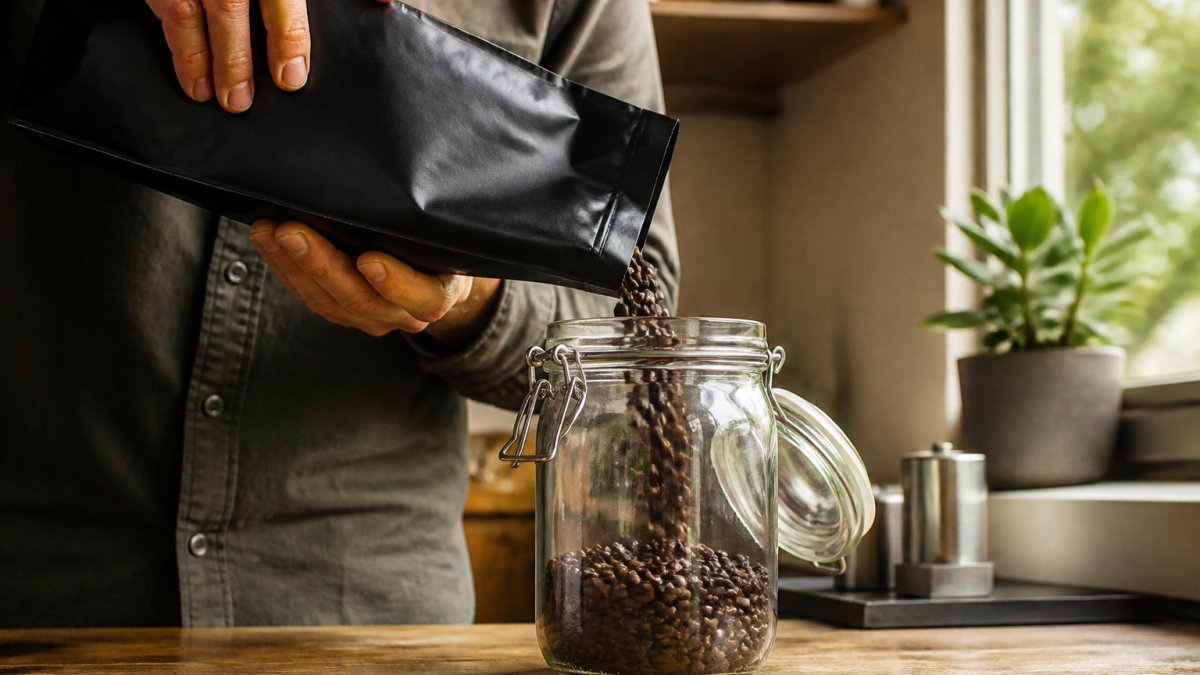
The container matters more than the location. Any airtight container works, glass jars with rubber seals, metal tins, or even the original bag if it has a good seal.
Don't freeze coffee. Freezing and thawing creates condensation inside the bag, which introduces moisture. Moisture is bad. Your pantry at room temperature is the right place.
Best Sellers Sample Pack: 6Bean, Cowboy, Breakfast, Peru, Mexico, Bali →
Keep the container closed between uses. Every time you open it, you're letting oxygen in. It sounds paranoid, but it matters.
If you order a larger quantity to save on shipping, split it into smaller containers. Keep one container open for daily use and seal the rest.
Single-Origin Coffee Versus Blends: Finding Your Preference
Single-origin coffee comes from one region and lets you taste what that place produces. Blends combine beans from different regions to create a specific flavor profile.
Blends are engineered. The Breakfast Blend is a great example: it brings together specialty-grade coffees for balance and consistency, roasted to highlight sweetness without weight.
Single origins let you taste a place. Peru tastes different from Colombia tastes different from Ethiopia. That difference comes from altitude, soil, climate, and how the coffee was processed. If you like learning about where things come from, single origins are more interesting.
Neither is objectively better. Some people prefer the complexity of exploring single origins. Others prefer the consistency of a well-made blend. Try both and figure out what you actually enjoy. That's the whole point of a sample pack.
Matching Your Brewing Method to the Right Roast
The roast level and your brewing method should work together. Light roasts have more acidity and brightness. Dark roasts have more body and depth.
For pour-over or drip coffee makers, medium roasts work beautifully because they balance brightness and body. The Breakfast Blend is specifically designed for this, it's a medium roast built for everyday brewing without fussiness.
For espresso machines, darker roasts and espresso blends work better because espresso extraction is fast and intense. The 6Bean Blend in the Best Sellers Sample Pack is a dark roast specifically noted as great for espresso.
For French press, darker roasts shine because the immersion brewing method pulls out the body and oils that dark roasts have in abundance. Lighter roasts in a French press can taste thin.
For cold brew, medium to dark roasts work well because cold brewing is slow and gentle. It pulls out sweetness and smoothness without the intensity of hot brewing.
You don't need to be rigid about this. Good coffee tastes good in most brewing methods.
Why Freshness and 24-Hour Shipping Matter
Here's the thing nobody tells you about specialty coffee: freshness is the only thing you can't fake.
Bad Habit Collective roasts to order and ships within 24 hours. That means your coffee arrives at its peak. The oils are still bright. The flavors are still articulate.
Most online coffee arrives 5-10 days after roasting, which is fine but not peak. Grocery store coffee arrives 3-8 weeks after roasting, which explains why it tastes flat.
This is why specialty coffee subscriptions cost more than grocery store coffee. You're not paying for a brand name or fancy packaging. You're paying for coffee that actually tastes like something.
If you've been drinking the same grocery store coffee for years and thought that was just what coffee tastes like, freshness will surprise you. It's not a subtle difference.
A specialty coffee subscription for home is worth it if you actually care what you're drinking. The Best Sellers Sample Pack or the Single Origin Favorites Pack both give you variety without commitment.
Frequently Asked Questions
What is the difference between specialty coffee and regular coffee?
Specialty coffee is roasted in small batches from high-altitude, single-origin beans or carefully curated blends, with attention to flavor profile and freshness. Regular coffee is typically mass-produced, older, and roasted in large volumes. Specialty coffee emphasizes origin, roast timing, and taste clarity, you'll notice distinct flavor notes instead of a generic bitter cup. Freshness matters too: specialty coffee roasted and shipped within 24 hours tastes noticeably different from coffee sitting on a shelf for weeks.
Are coffee subscriptions worth it for home brewing?
Yes, if you drink coffee regularly and want consistent quality without the stale taste of grocery-store beans. A specialty coffee subscription ensures you receive freshly roasted beans on a schedule that matches your consumption, eliminating the guesswork of storage and freshness. You'll save money compared to café prices, and you gain access to single-origin and small-batch options you won't find locally. The real value is drinking coffee that actually tastes like something instead of just caffeine delivery.
How often should I get specialty coffee delivered?
Most people drink through a 12-ounce bag in one to two weeks, depending on how many cups per day they drink. If you brew daily, biweekly delivery keeps your coffee fresh without overstock. Heavy drinkers (multiple cups daily) might prefer weekly deliveries, while occasional drinkers can stretch it to monthly. The key is avoiding beans that sit too long after roasting, coffee peaks in flavor for about two to four weeks after roast date, then gradually loses clarity and brightness.
Can I choose the roast level and origin in a specialty coffee subscription?
Yes. Sample packs let you try multiple roasts and origins before committing to a regular subscription. Bad Habit Collective offers medium roasts like Breakfast Blend and House Blend, single origins like Peru and Costa Rica, medium-dark options like Bali Blue, and flavored varieties. Start with a sampler pack to discover your preference, some people prefer the clarity of lighter roasts, others want the body and depth of medium or medium-dark. Your brewing method matters too: espresso often shines with darker roasts, while pour-over and drip coffee highlight the nuance in medium roasts.
Should I order whole bean or ground coffee for a subscription?
Whole bean stays fresher longer because the surface area exposed to air is minimal. Grind just before brewing to preserve flavor and aromatics. If you don't have a grinder or prefer convenience, ground coffee works fine, just use it within a week or two of receiving it. Most specialty coffee subscriptions ship whole bean by default because the quality difference is worth the extra step. If you're new to specialty coffee and want to skip the grinder investment, ground coffee from a fresh roast still tastes significantly better than mass-market alternatives.